The basics: clothing and accurate information
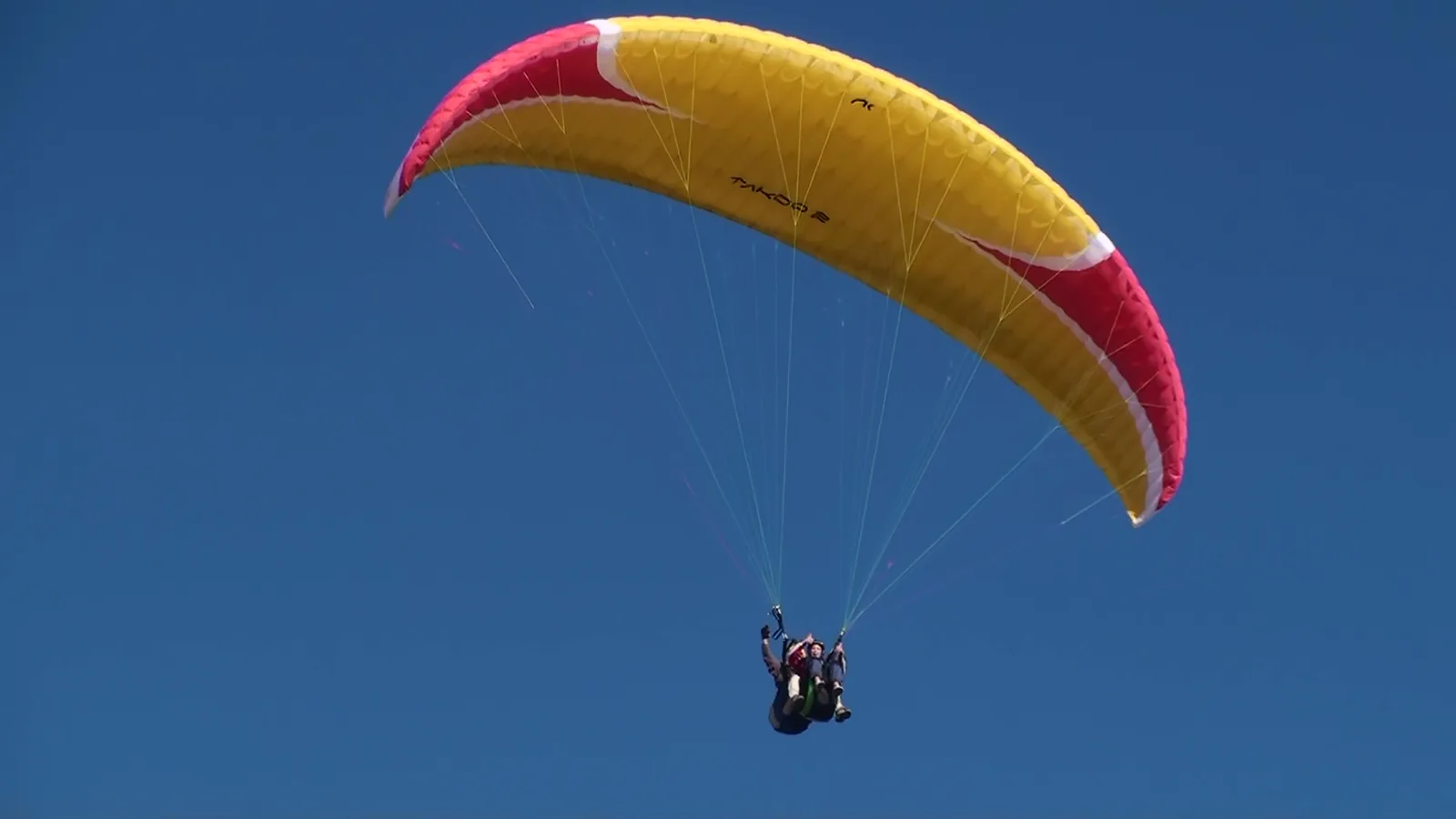
Bungee jumping, ziplines, paragliding, skydiving and ballooning require different preparation. Do not buy a supposedly universal aerial kit for an introductory experience. Obtain the provider’s instructions first: closed footwear, unrestricted movement and weather-appropriate layers are usually more useful than personal technical systems. Give accurate height, weight and mobility information when requested; the particular installation’s rules and equipment fit matter more than generic internet advice. Discuss glasses, medication and required documents. The photograph shows paragliding in the Montsec foothills and illustrates one format, rather than the location of every activity described here. Separate belongings needed while waiting from those approved for the activity itself.
Bungee and zipline: the installation’s equipment
Jump systems and cable-travel equipment belong to the particular service. The operator selects a compatible combination, checks participant information and directs fitting. At Valle de Tena, for example, height and weight checks precede equipment provision and instructor explanations. This provides useful booking questions, rather than universal numerical limits. Establish whether there is a walking approach and where bags can be left. Remove loose scarves, jewellery and pocket contents as instructed. Do not substitute your own harness without agreement or change connections yourself. An elastic-cord jump and a pendulum jump are also different services, so confirm what you have actually booked before choosing clothing and planning the day.
Paragliding: the approach and passenger fit
For tandem paragliding, the pilot organises the flight equipment, including the passenger harness and head protection. Confirm the package, footwear for a foot launch and the actual approach: a vehicle transfer and a hike-and-fly outing require different personal preparation. Bring a windproof layer even when the valley is warm, while keeping pockets uncluttered. Fitting should use the clothing you will wear in flight. Report pain, restricted movement or difficulty following instructions before departure. Do not add a camera, straps or a backpack without the pilot’s agreement. If wind changes the launch site, reconfirm the meeting point and transport instead of automatically following an outdated location.
Skydiving: clothing, documents and cameras
For a tandem skydive, the centre selects passenger equipment and conducts the briefing; buying a personal parachute is unnecessary for an introductory experience. Closed sports shoes and seasonal clothing are a starting point to confirm with the school. Pamiers notes that a windbreaker, fleece and gloves may be needed, and prohibits personal cameras during tandem jumps. These conditions should not be assumed identical everywhere, so ask beforehand. Required documents, a health questionnaire or a medical certificate depend on the centre and your circumstances. Check before travelling. Leave time for weather delays and ground preparation: an appointment time does not promise a jump at that exact minute.
Ballooning and the final check
Balloon passengers generally travel in a basket, which creates different clothing and access considerations from a suspended harness. Ask about climbing into the basket, standing for the required period and following landing instructions; accessible arrangements vary between operators. An early departure calls for layers and footwear suitable for a field, rather than only pavements. Establish how the ground return is organised. For every aerial format, confirm the forecast, operating decision, postponement arrangements and storage for belongings. Payment or a long journey is not a reason to pressure staff after cancellation. Report discomfort before the activity starts, even if doing so changes your plans for photographs or a special occasion.