Start with training and a suitable route
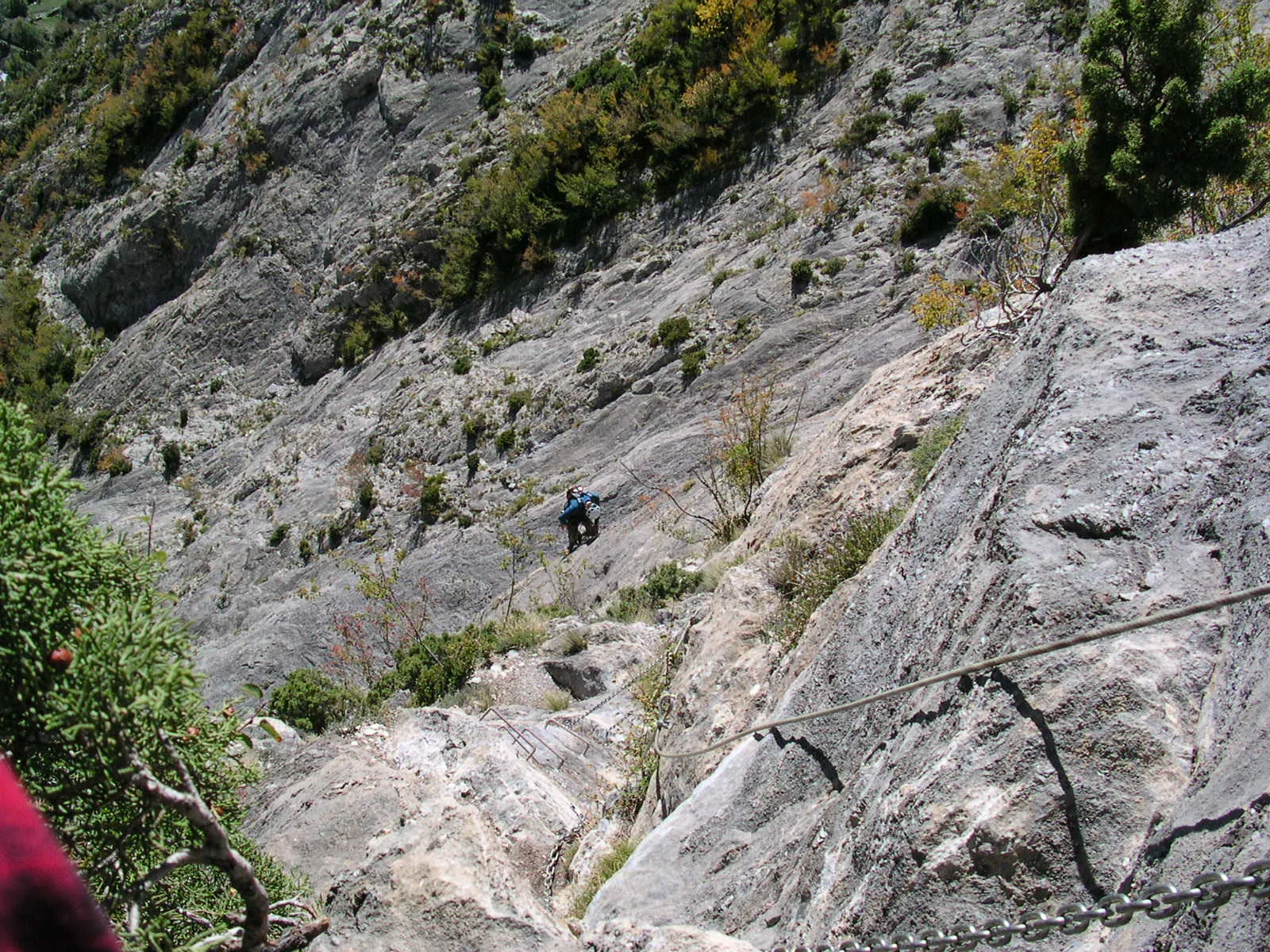
A via ferrata combines rock with fixed footholds and a safety cable. It makes vertical terrain accessible but requires correct equipment use. For a first experience, choose instruction with a qualified local guide and a route suited to everyone taking part.
Do not make the longest bridge your only goal. Ask about the approach, hardest moves, escape options, descent and the amount of sun on the wall at your planned time.
Read beyond the grade
Directories use K grades and French letter categories. They do not form an exact conversion table. Routes with the same grade can differ in duration, overhangs and exposure. SENDA retains each source’s grading system; check the operator’s current route diagram when descriptions disagree.
Ask your guide to explain the hardest section before starting. Mention discomfort with heights in advance: exposure may matter more than strength.
Equipment must suit its user
Via ferrata equipment includes a suitable harness, helmet and a purpose-designed energy-absorbing lanyard. An ordinary sling is not an equivalent substitute. Check compatibility, user weight range and fitting against the particular manufacturer’s instructions.
With children, consider height, reach to the cable, skills and equipment limits alongside any family-friendly label. Using an additional rope requires appropriate competence. Carry out a supervised partner equipment check before moving onto the route.
Check conditions on the day
Contact the operator or municipality. Appearing in a directory does not confirm that equipment is sound. Rain, storms, damage or slope maintenance can change the plan. If the forecast is unsuitable, postpone the activity.
Prepare a nearby walking alternative. Choosing to stay off the wall can still lead to an excellent day. This guide helps organise the outing; movement techniques and responses to problems require practical instruction.