Two different plans for the day
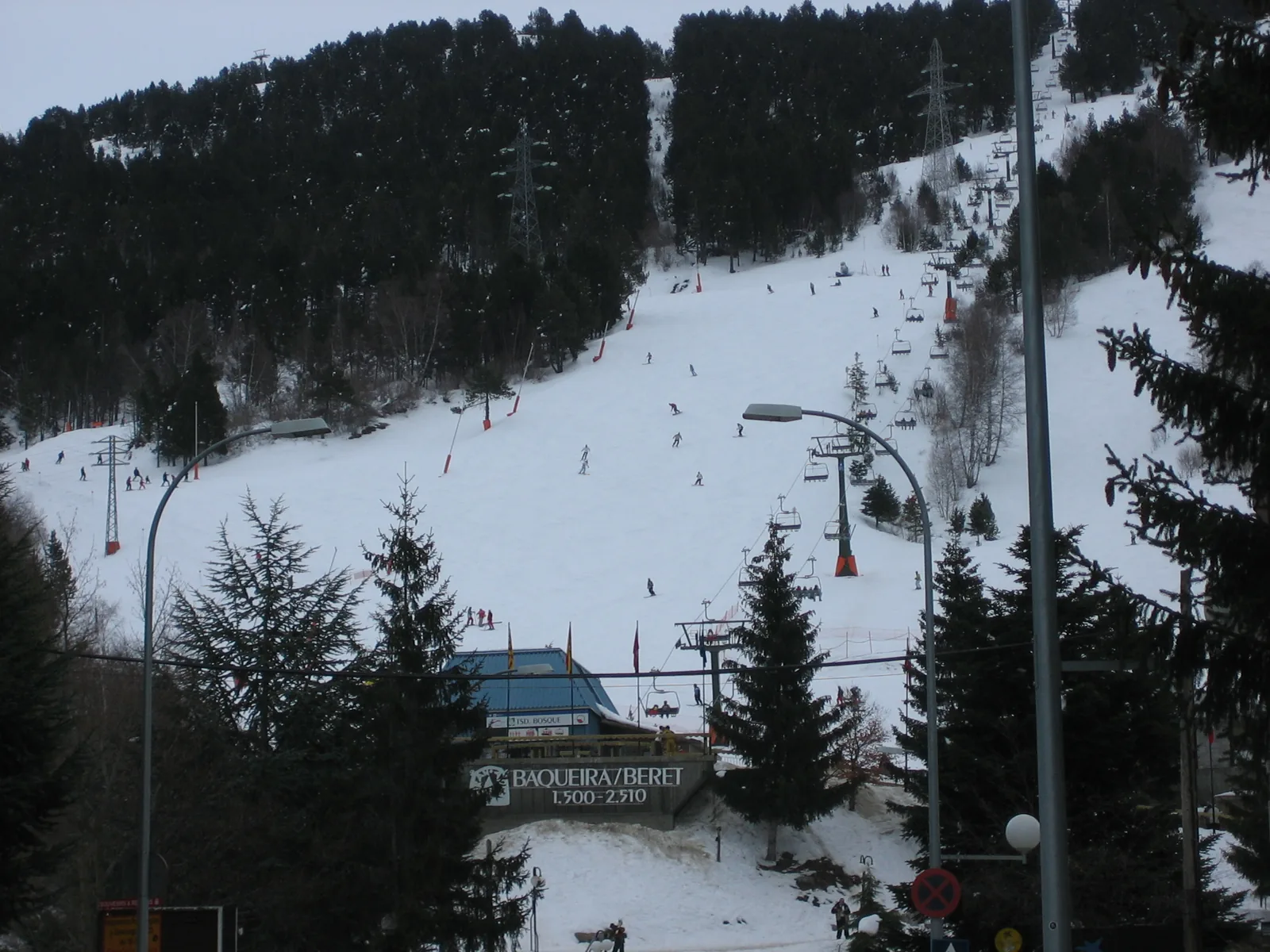
Skiing open marked pistes and venturing beyond them require different planning. A nearby lift, visible tracks or the word freeride on a map does not turn every slope into a managed piste. Decide on the format before booking and explain your level to the school or guide. The Baqueira photograph shows resort scenery, rather than the current snowpack or an open sector. For beginners, a lesson and appropriate learning area are more useful than equipment for every imaginable descent. If the objective changes to off-piste terrain, reconsider the route, group skills, local conditions and equipment. Simply exchanging your skis for a wider pair is insufficient preparation.
Personal layers and protection
Choose clothing that allows movement and temperature adjustment: a base layer, insulation for the forecast and protection from wind and precipitation. Add ski socks of suitable thickness, gloves, eye protection and sun protection. Goggles and helmet should work together without pressure or uncomfortable gaps; try them on together. Do not compensate for poorly fitted boots by wearing several thick pairs of socks. For children, allow for dry spares and regular breaks, and choose protective equipment by its actual fit. Water, a snack and a charged phone remain useful within a resort. Arrange them so that pocket contents and your backpack do not interfere with lift use or movement.
Rental: fit before promises
When hiring, provide your experience, the measurements requested and the intended type of skiing. Try boots with your own ski socks and allow time for fitting: pain, numbness or obvious movement of the foot should be addressed before departure. Boot-binding compatibility, technical checks and adjustment belong with competent staff; do not change settings using a table found online. Confirm whether poles and a helmet are included and whether appropriate children’s sizes are available. Ask about exchanging uncomfortable equipment, obtaining help and the return deadline. If problems persist after a short initial trial, return to the shop. Time spent improving fit is preferable to a whole day enduring unsuitable equipment.
Off-piste: equipment and training
Entering avalanche terrain calls for an individual rescue set comprising an avalanche transceiver, probe and shovel. Carry and check it according to training and equipment instructions; every participant needs the relevant skills, rather than merely knowing who holds a shared device. Renting this set requires familiarisation and practice before the outing. It neither prevents avalanches nor guarantees rescue. An avalanche airbag, where used, does not replace this foundation or route decisions. You also need the avalanche bulletin for the correct area, a mountain forecast and competent terrain assessment. For initial outings, choose suitable training and a qualified guide instead of conducting an independent experiment beyond a barrier.
Do not confuse protection with permission
Do not enter a closed piste because you have a good helmet or know the map. Another group’s tracks do not establish stability, and a low bulletin rating does not remove danger from every slope. Keep plans within your preparation and follow local restrictions. A phone is not a substitute for an avalanche transceiver, and a recent purchase is not a substitute for practice. Before travelling, check lift operation, access and rental cancellation arrangements. After a helmet impact or equipment fault, consult staff and follow manufacturer instructions. Dry your clothing and assess fatigue afterwards: tomorrow need not repeat today’s programme if your energy or the conditions have changed.