Identify the route first
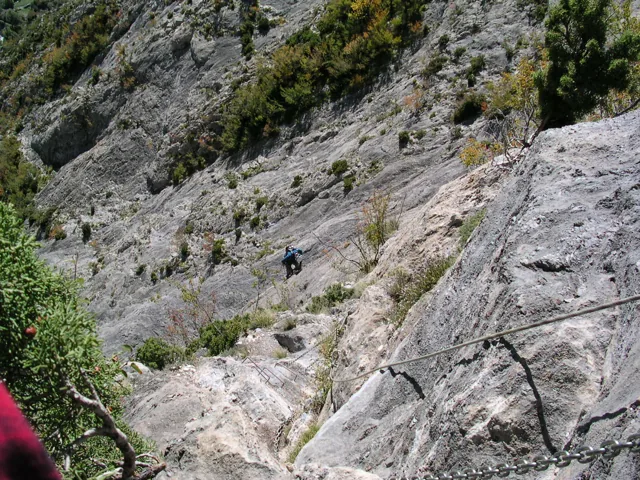
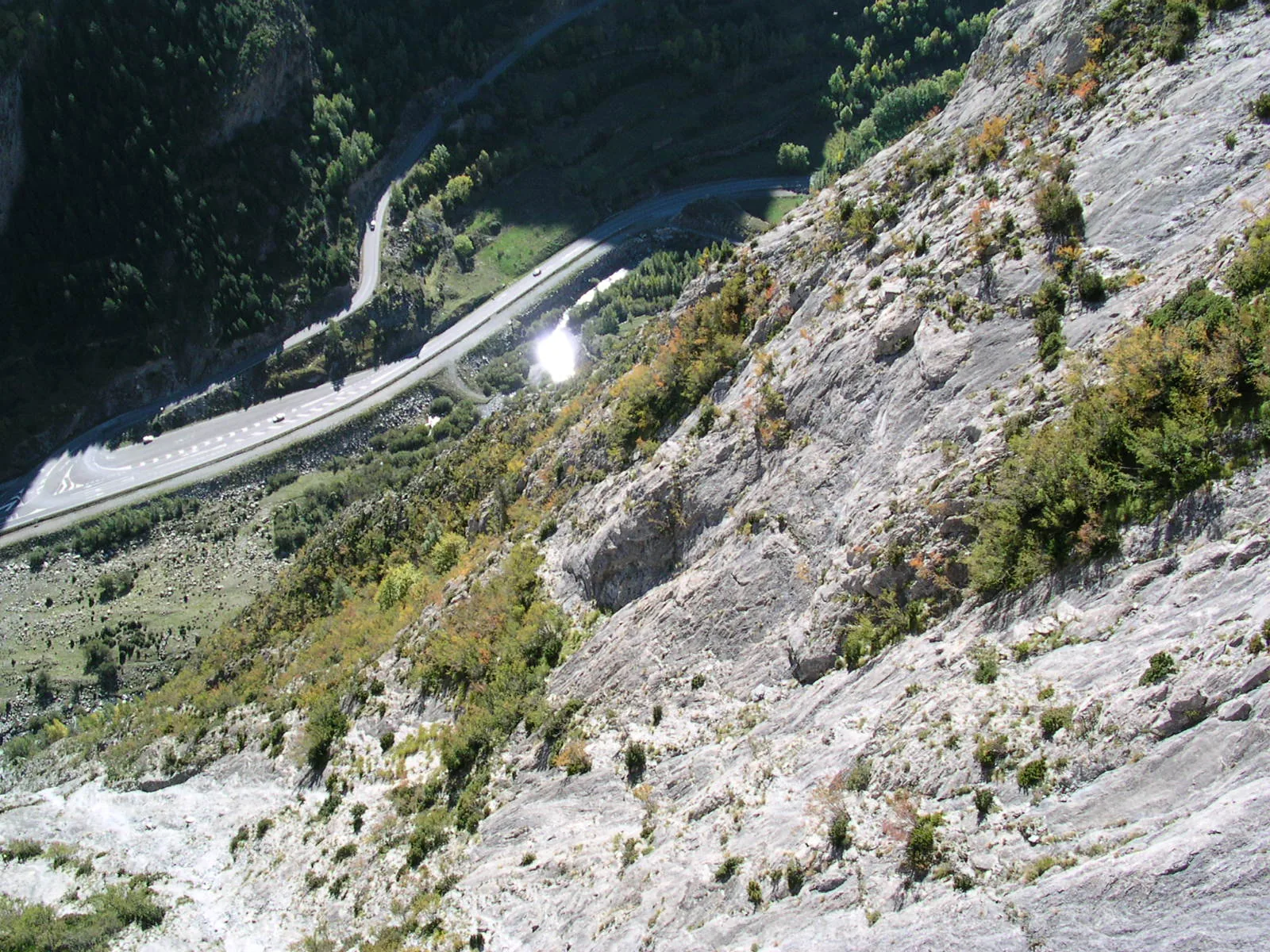
The label via ferrata sometimes covers different equipped routes. Before choosing equipment, establish whether there is a safety cable, separate bridges, an abseil or a zipline with its own requirements. A short line can be physically difficult and an easy ascent can have an awkward return. The photograph of Sacs near Benasque depicts a real ferrata but does not replace its current description or certify its installations. Check status with the manager or a local guide. For a first outing, choose a programme that explains the equipment and assesses your preparation before entry, rather than merely handing over a bag at the car park.
Three core items and personal essentials
The core set comprises a purpose-designed via ferrata energy absorber with its lanyards and connectors, a compatible harness and a suitable helmet. Manufacturer instructions determine whether a particular user and combination of components are acceptable. Plain slings or two miscellaneous carabiners do not replace an energy absorber. Add footwear for the approach and rock, clothing without loose hanging parts, water and reserve warmth. Gloves can improve hand comfort but do not provide fall protection. The pack should allow shoulder movement without interfering with the harness. Agree equipment for unusual course features separately; a supposedly universal accessory may be incompatible.
Children and product-specific limits
There is no single age after which every child can use every set. Relevant factors include user mass as defined by the manufacturer, harness sizing, reach to the cable and ability to follow instructions. Read the manual for the actual product supplied; different models and generations can have different conditions. If a child falls outside its limits, tightening the harness further does not solve the problem. The manufacturer’s technical guidance cited in the sources requires additional rope protection for children. A competent professional must organise it; this is not something to learn by improvising on the wall. Consider fatigue, fear and the return journey, and agree the complete plan with a qualified guide.
Rental and checking the fit
At the rental desk, ask for the components, compatibility and instructions to be explained. Confirm whether helmet and harness are included and who performs the fitting. Before departure, a professional should check the fit over your clothing and any interference with your pack. Report discomfort immediately: numbness, slipping or inaccessible components should not be accepted to preserve the schedule. Inspect the items with staff; damage or uncertainty about protective equipment’s history requires replacement or a competent decision. Do not add personal components without agreement. Clarify cancellation and return arrangements so rental deadlines do not create pressure on a technical descent.
What new equipment cannot compensate for
Modern equipment does not make thunderstorms, wet rock or a closed route suitable for an outing. It does not replace training in movement or dealing with difficulties. Never test an absorber through deliberate falls or reuse equipment after significant loading without following the manufacturer’s decision process. Do not modify, repair or rearrange hired components using an arbitrary video. Recheck the forecast and return options during the approach, then complete the equipment check with the guide before technical ground. Choosing another activity because you are uncomfortable before starting is reasonable. Afterwards, follow product instructions for cleaning, drying and storage rather than ordinary clothing habits.