Establish the type of descent first
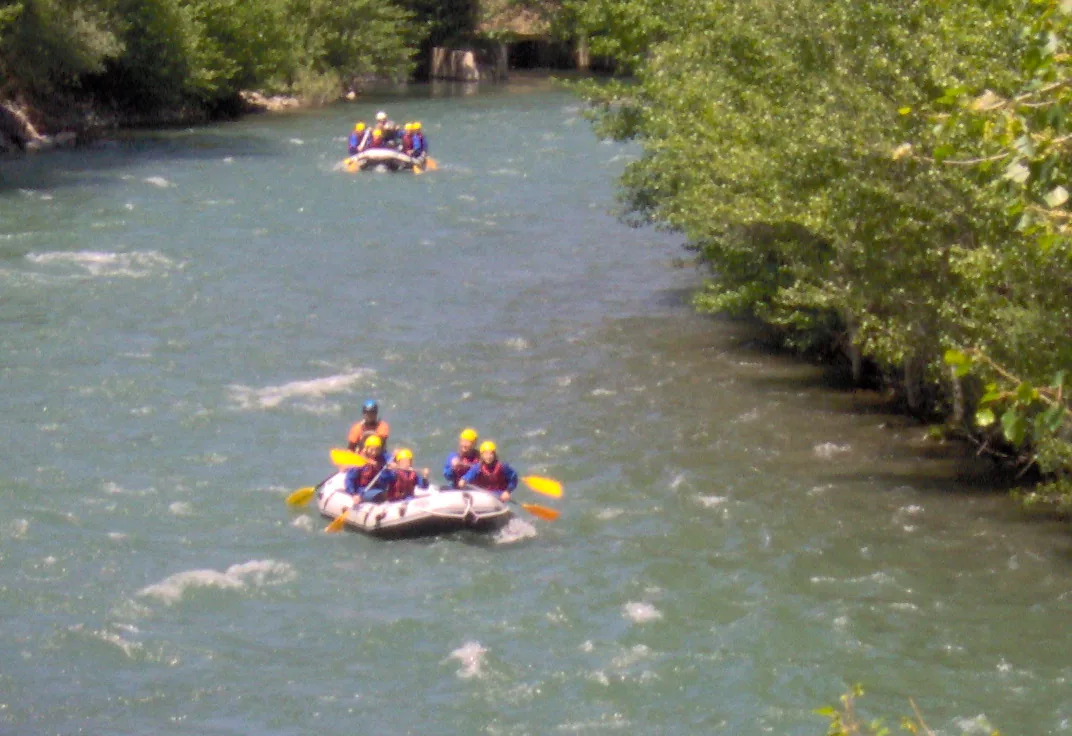
The photograph shows rafting on the Noguera Pallaresa, where participants share a boat under a guide’s direction. Canyoning can combine a walking approach, water, slippery rock and technical rope sections. The shared idea of a descent does not imply a shared equipment list. When booking, establish the exact route, expected time in the water and swimming and fitness requirements. Describe previous experience honestly: swimming in a pool does not describe readiness for cold moving water. For a first outing, choosing a suitable guided programme is more useful than hiring additional equipment for an independent route. Discuss children’s participation and available protective equipment sizes separately.
Personal belongings and a dry return
Bring swimwear, a towel, a complete dry change and footwear for afterwards. Agree on activity footwear beforehand: wet rock needs secure fastening and a suitable sole, and the centre may provide its own shoes. Do not assume beach sandals become suitable because you are wearing a wetsuit. Discuss prescription glasses and an activity-compatible way to retain them. Ask where to leave keys, phones and documents, and which items may accompany you. If medication might be needed, agree with the guide beforehand how it will remain accessible and protected from water. Keep the dry change separately and ensure it is available after the shuttle, rather than only in a distant parked car.
What the operator supplies
For rafting, confirm provision of an activity-appropriate buoyancy aid, helmet, paddle and thermal protection for the conditions. Canyoning needs a different combination: the guide selects protection against cold and impacts, plus a suitable harness and collective rope equipment on technical routes. Do not transfer equipment between activities without a competent decision. Ask the centre to unpack the phrase equipment included, particularly for shoes and neoprene socks. Check which sizes are reserved for your group and who will verify the fit. On an introductory guided trip, obtaining technical equipment through the provider is sensible; buying a rope or descender does not itself provide the skills to use it.
Fit, cold and the needs of the group
Try the supplied equipment before leaving the centre. A wetsuit must suit your size and the expected temperature; a loose or movement-restricting garment needs discussion with staff. Helmets, buoyancy aids and harnesses each have their own fitting checks: tightening everything as much as possible is not proof of correct fit. Report rubbing, restricted movement, persistent cold or strong anxiety promptly. Before paying, ask how the operator assesses health considerations and participation restrictions; medical uncertainties should be discussed with an appropriate professional. For children, the particular route, water conditions, abilities and actual equipment fit matter together. There is no universal age that makes every water descent appropriate for everyone.
Mistakes to remove before the outing
Avoid loose jewellery and do not attach a camera to a helmet without approval. A water-resistant phone pouch neither guarantees the phone’s survival nor justifies occupying your hands. Jumps, rope movements and actions in moving water require instructions on site; this guide does not teach those manoeuvres. Reconfirm the outing before travelling, because rainfall, water levels and management decisions can change the programme. Establish postponement terms, the meeting point and the return shuttle arrangement. Afterwards, report damage to borrowed equipment and follow return instructions. Clean and dry personal clothing appropriately: damp equipment sealed in a bag is a poor reserve for the following day and makes problems harder to spot before reuse.