1. Choose the format for your first day
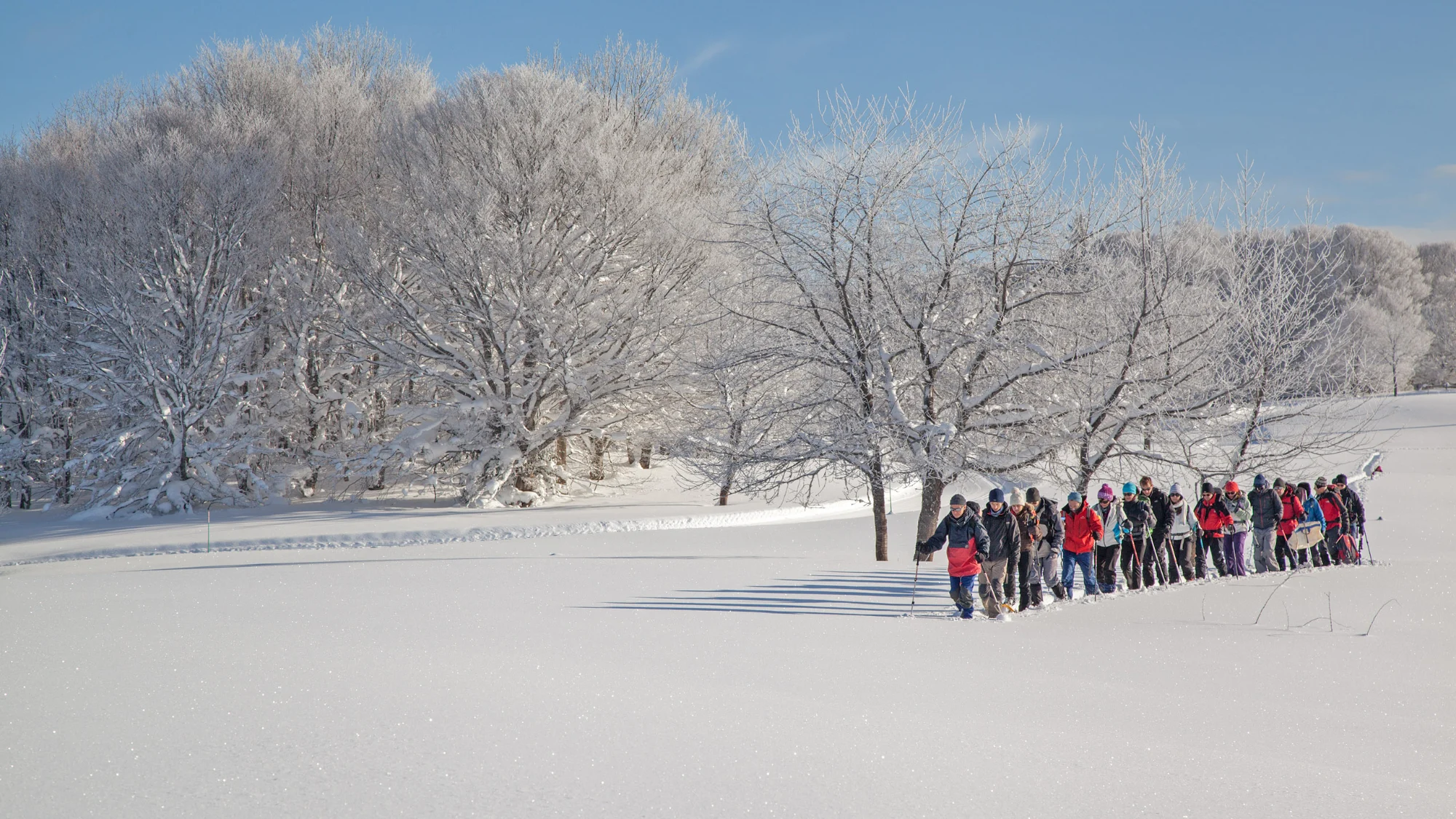
For a first snowshoe day, choose a short guided introduction. If you want to walk independently, look for an official waymarked winter walking itinerary within a managed area whose manager confirms it is open on your chosen date. Being at a resort and finding waymarks do not, by themselves, describe every hazard on the route.
Snowshoes attach to footwear and help you move over snow. They do not replace experience on ice or the ability to assess avalanche terrain. The same slope can demand different preparation in summer and winter; a familiar summer track is not enough to plan a first outing.
This guide helps you prepare a winter trip: choose a format, check conditions and gather equipment. The Grandvalira and Pont d’Espagne examples do not announce activities or snowy trails open today. See «The Pyrenees in winter without skiing» for a comparison of bases.
2. Read the forecast and bulletin for the right area
Write down the starting point and the area covered by the route. In Catalonia, use ICGC avalanche information and the AEMET mountain forecast; in Andorra, use the Servei Meteorològic Nacional at meteo.ad; in the French Pyrenees, use Météo-France mountain forecasts and avalanche bulletins. ICGC does not describe conditions in Cauterets.
Find the bulletin’s issue date, validity period, area and elevations. Compare them with the route confirmed by the operator or guide. Outside the season, the page may retain a notice about the service restarting: that is not a current assessment. The absence of a new bulletin does not mean there is no avalanche danger.
The day before and again that morning, check wind, precipitation, temperature, visibility and the route’s opening notice. If you cannot relate the forecast and bulletin to your route, discuss them with the guide before paying. A colour or a single number from a bulletin is not clearance to enter a slope.
3. Check a specific booking
Grandvalira’s conditions vary between sectors. El Tarter lists a guided outing from 10:00 to 13:00, meeting at 09:00 at the ski school in the Obac building in El Tarter. Snowshoes and poles are included; mountain footwear is required separately, and this excursion does not require a lift pass. Read the operator’s current conditions before choosing a date, rather than transferring terms from another activity.
The El Tarter route usually goes outside the ski area and is adapted to the snow. The additional insurance described on the page covers activities inside the ski area: confirm coverage for your excursion outside it. Also check operating days, minimum group size, the single-booking supplement, participation requirements and cancellation terms.
Before paying, make a short note: «Sector and date; meeting place and time; duration; included equipment; my footwear; insurance coverage; cancellation and refund». The 09:00 meeting and the 10:00 activity start are different entries. A booking button does not confirm spaces on your chosen date.
4. Try the snowshoes with the footwear you will use
For a first outing, hire snowshoes and poles or choose an activity that includes them. Before booking, tell the hire shop or guide your shoe size and ask whether that type of footwear fits the model supplied. Check whether boots are available too: snowshoe hire does not imply footwear hire.
The French Ministry of Sport recommends suitable high-cut footwear, including hiking boots, and warm socks for snowshoeing. An operator’s specific footwear requirement applies to its own activity. When collecting equipment, ask for a demonstration of the bindings, a fit check with your boots and an introductory practice before setting off.
5. Pack clothing and essentials
Prepare a fleece or other warm garment, clothing for walking, a waterproof jacket, suitable trousers, a hat and gloves or mittens. Add sunglasses and sunscreen. Match the kit to the forecast and the guide’s list; having several layers available does not mean wearing them all at the start.
Pack water, food, a personal first-aid kit, an emergency blanket and a headlamp. Ask the organiser what additional personal equipment is required. The first-aid kit and blanket are separate items; do not substitute shared group equipment for personal items without checking the activity’s requirements.
Charge your phone and power bank, and take a compatible cable. Connect them at home and check that the phone starts charging. Cold drains batteries faster; the phone should not be your only way of understanding the route. Before departure, go through the route and return plan with the guide or manager.
6. Write down the route and return deadline
Save the official winter route map and check that it opens without a connection. Locate the start, confirmed route and return point. A saved image does not show your location or replace navigation skills; choose accompaniment if you cannot relate the map to the ground.
Complete a day card: «Start; winter itinerary; ascent and duration supplied by the manager; early return options; return deadline; last transport needed». Set the deadline with darkness in mind and share the plan with someone staying behind. For a guided outing, agree these details with the guide first.
A marked example: Pont d’Espagne
Cauterets describes a winter route from Pont d’Espagne through Plateau du Clot towards Plateau du Cayan, with purple waymarks. Before travelling, check opening information and request the current winter map, full distance and turnaround point. Follow the confirmed walking itinerary and respect signs where it runs beside cross-country ski trails.
Hire snowshoes and poles in Cauterets village before going up to Pont d’Espagne. Check the road, parking and transport separately for your date. Autumn access on foot does not confirm the winter route is operating.
Lac de Gaube is a separate objective. The tourist office warns about winter hazards and recommends professional accompaniment. Do not extend the outing to the lake because you know the summer route: one marked walk being open does not describe conditions on the neighbouring path.
When to change the plan
Cancel the chosen outing if the route is closed or the operator cancels it. Agree a valley alternative in advance for an unfavourable forecast. On the outing, poor visibility, cold, wet clothing, fatigue or falling behind the return deadline are reasons to stop progressing and follow the plan agreed with the guide; do not improvise a new itinerary.
Bombers de la Generalitat recommends an avalanche transceiver —DVA—, shovel and probe outside piste perimeters, together with regular practice. That equipment does not prevent an avalanche. If a plan requires selecting avalanche terrain or technical travel, the next step is training and appropriate accompaniment, not independent learning from this guide.
Routes and trip planning
Source and current conditions
- Bombers de la Generalitat · muntanya hivernal
- ICGC · Allaus
- AEMET · Predicción de montaña
- Servei Meteorològic Nacional d’Andorra · neu i allaus
- Météo-France · risques d’avalanche, Pyrénées
- Grandvalira · raquetas de nieve
- Ministère des Sports · raquettes à neige
- Cauterets · snowshoeing
- Cauterets · Pont d’Espagne en hiver
- Montaña Segura · material en terreno de aludes